

If there’s one thing I’ve seen over and over again, it’s this: people underestimate ventilation. A ventilation fan is a simple piece of equipment, but it does a big job,...

What Is A Ventilation Fan? A Complete Guide For Homeowners
By Mike Holmes
Mike’s Advice / Home Renovation
Tuesday, November 10th, 2026 @ 9:18am
If there’s one thing I’ve seen over and over again, it’s this: people underestimate ventilation. A ventilation fan is a simple piece of equipment, but it does a big job, and essential for your home. It pulls out stale, humid, or polluted air and helps bring in fresh air. When I walk into a bathroom and don’t see a fan installed, that’s a big red flag to me. In older homes, it was common to not have ventilation in the bathrooms. Code has since been updated and this is a must-have in every single bathroom.
And let me be clear—proper ventilation isn’t optional. It’s essential. Without it, you’re setting your home up for moisture problems, mold, and poor air quality. Bathrooms, kitchens, and basements are areas where moisture and contaminants build up fast.
There are a lot of options out there, but high-quality systems—like Panasonic ventilation fans—are designed to do the job right, quietly and efficiently. I’ve trusted Panasonic products in our jobs for years – I feel good about helping homeowners keep their homes healthy.
Here is my complete guide for homeowners on ventilation fans.
What Is a Ventilation Fan?
A ventilation fan is a mechanical system that removes stale air, excess moisture, and pollutants from your home. It improves your indoor air quality by getting rid of the stuff you don’t want to breathe in.
Now don’t confuse ventilation with air conditioning. Air conditioning cools the air—it doesn’t remove moisture or contaminants the way proper ventilation does. You need both working together to keep your home healthy.
RELATED: Improving Indoor Air Quality
How Does a Ventilation Fan Work?
It’s pretty straightforward. A ventilation fan pulls stale musty air out of a room and pushes it outside. As that air leaves the home, fresh air is drawn in to replace it. Older homes naturally pulled in replacement air through drafts and leaks. But newer homes are built much tighter, which is great for energy efficiency—but it also means they need good quality ventilation fans and systems like ERVs or HRVs to properly bring in fresh air.
That process helps remove:
- Moisture
- Odors
- Airborne contaminants
The fan connects to ductwork or vents directly outside. And that “outside” part matters—if you’re venting into an attic or wall cavity, that moist air is going to create problems.
Why Ventilation Fans Are Important in Your Home
This is where things get serious. A good ventilation system:
- Prevents mold and mildew growth
- Reduces humidity levels
- Improves indoor air quality
- Protects your walls, ceilings, and insulation
- Makes your home more comfortable and healthier
Skip proper ventilation, and you’re asking for rot, condensation damage, and expensive repairs.
RELATED: How To Remove A Musty Smell In Your House
Types of Ventilation Fans
Bathroom Ventilation Fans
These are critical. Every bathroom should have one. They remove moisture from showers and baths before it can soak into drywall, framing, and insulation.
Kitchen Ventilation Fans (Range Hoods)
Cooking produces heat, grease, smoke, and odors. A proper range hood pulls all that out before it spreads through your house.
Whole-House Ventilation Systems
These systems continuously exchange indoor and outdoor air throughout the entire home, like an ERV for example. They’re especially important in newer, airtight houses.
Related: Ventilation in Kitchens & Bathrooms
Key Features to Look for in a Ventilation Fan
Don’t just grab the cheapest fan on the shelf. You need to get this right. Here are some factors you should consider when choosing ventilation fans:
- Airflow capacity (CFM): Make sure it’s sized properly for the space. Or better yet, pick a model that allows you to choose your CFM.
- Noise level (sones): The quieter, the better—no one wants a jet engine in their bathroom
- Energy efficiency: Look for ENERGY STAR® certified models
- Smart features: Humidity sensors and timers help automate performance
- Build quality: Cheap fans don’t last
Key Features That Make Panasonic Fans a Smart Choice
I’ve trusted the Panasonic brand for years and their ventilation fans are a top choice for me. Here’s why:
Ultra-Quiet Operation: Some fans are so loud people don’t use them—and that defeats the whole purpose. Panasonic fans are built to run quietly, so they actually get used.
Energy Efficiency: Many Panasonic ventilation fan models are ENERGY STAR® certified, which means they use less power and save you money over time.
Advanced Features: Built-in humidity sensors, motion detection, and smart airflow controls take the guesswork out of ventilation.
Reliable Performance: These units are built to last. Solid construction, dependable motors—that’s what you want in something running regularly in your home. Plus, there’s a 6 year warranty on motors, 5 years on the LED light, and 3 years on parts.
Panasonic Standout Models
Panasonic’s Whisper-series ventilation fans are known for their quiet operation, energy efficiency, AC and DC motor technology; and includes:
These bathroom exhaust fan models have specific application-focused solutions within the lineup, featuring adjustable airflow (Pick-A-Flow), easy installation techniques and LED lighting in the WhisperBoost® LED model.
You might be familiar with heat recovery ventilators (HRVs). ERVs also help manage moisture in your home. This means a COMFORTABLE indoor environment.
How Do You Choose The Right Panasonic Fan?
WhisperBoost® & WhisperBoost® LED – Whisper Quiet Operation and Adjustable Speed
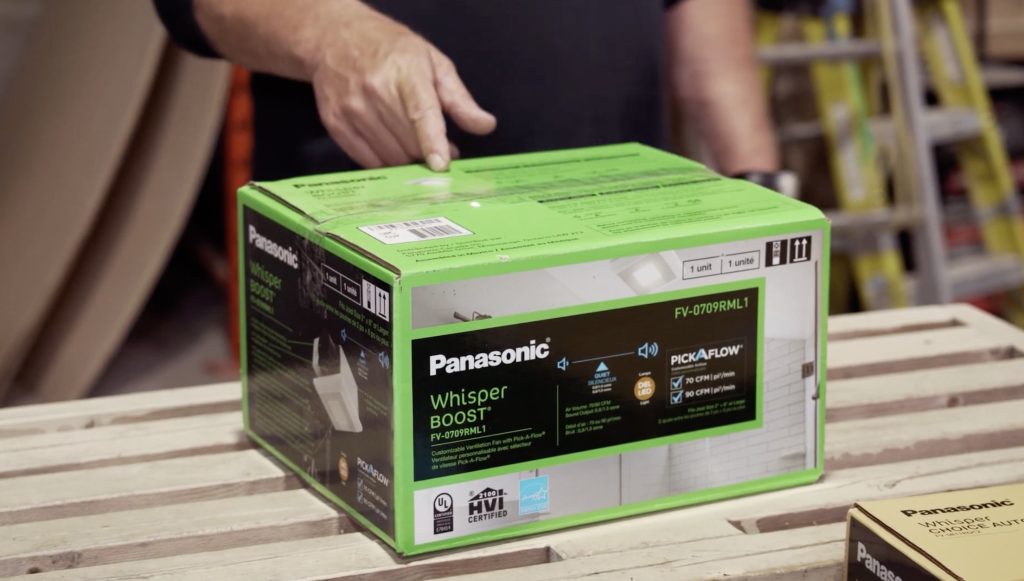
Panasonic Whisper Boost is a great option for replacement fans.
The WhisperBoost®and the WhisperBoost® LED fans allow you to choose the proper airflow for the size of your bathroom so it is well ventilated and is much quieter than standard builder-grade fans.
Key features:
- Pick-A-Flow® allows for 2 airflow speeds (70/90 CFM)
- Whisper-quiet operation: as low as 0.7 sones at 70 CFM and 1.5 sones at 90 CFM
- 4” duct-adapter
- Built-in damper reduces backdrafting
- Allows for ceiling or wall mount (fits in a 2” X 6” stud or larger)
- UL listed for a tub/shower enclosure when GFCI protected
- Built-in metal flange provides blocking for penetrations through drywall and air barrier and assists with the decrease in leakage
- Energy Star Certified
What’s it best for:
- Specially designed for remodelling and replacement jobs
- Perfect for replacing old, noisy builder-grade fans.
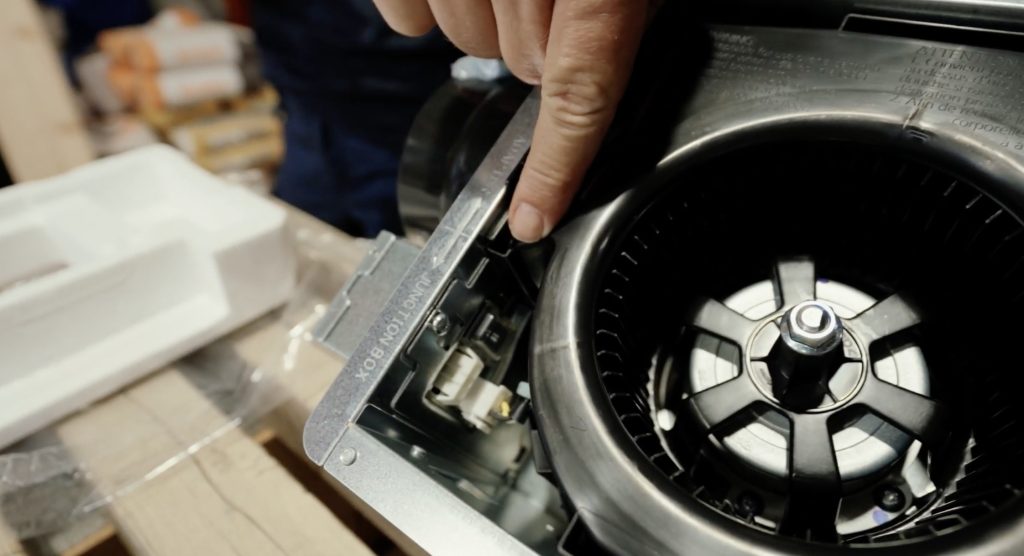
The Whisper Boost allows you to choose your CFM using a built-in speed selector switch.
WhisperRemodel® — built for retrofits and tight installs
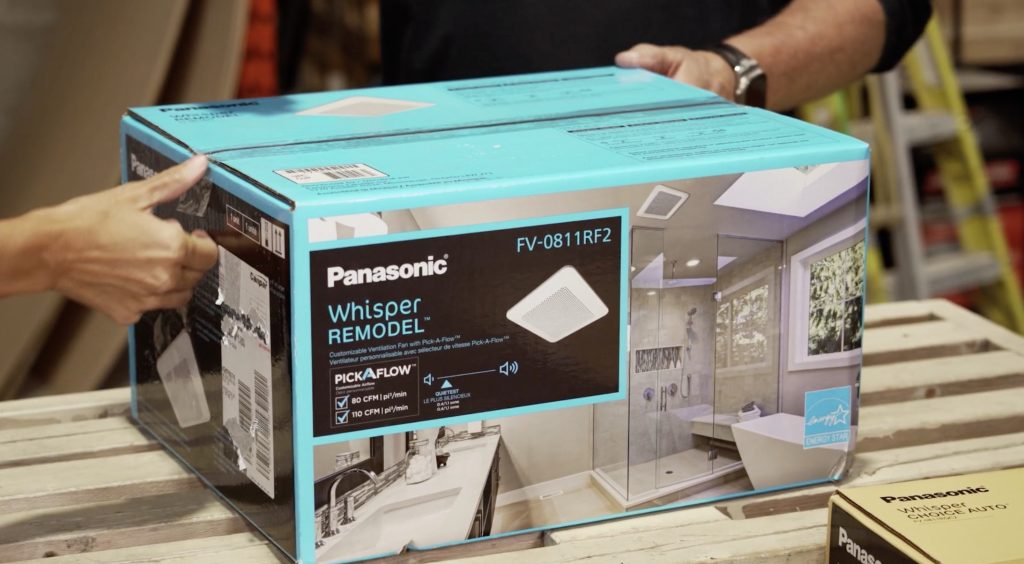
This is your go-to retrofit fan.
The WhisperRemodel® is a compact, high-performance bathroom fan designed specifically for remodeling and replacement jobs. Great for contractors who want ONE fan that fits multiple scenarios. Plus, this model is especially helpful where you don’t have attic access, and the Flex-Z Fast® installation bracket provides fast, flexible installation.
Key features:
- Pick-A-Flow® airflow selector (80 or 110 CFM) provides customizable fan speed
- Ultra-quiet operation (as low as 0.4 sones)
- Uses the Flex-Z Fast® installation bracket for fast, flexible installation, often including 4-inch duct with a 3” detached adaptor
- Built-in damper to reduce backdrafting
- Low-profile housing fits into typical 2×6” joist spaces
- Designed for installation from below the ceiling (huge time-saver in renos)
- UL listed for a tub/shower enclosure when GFCI protected
- Energy Star Certified
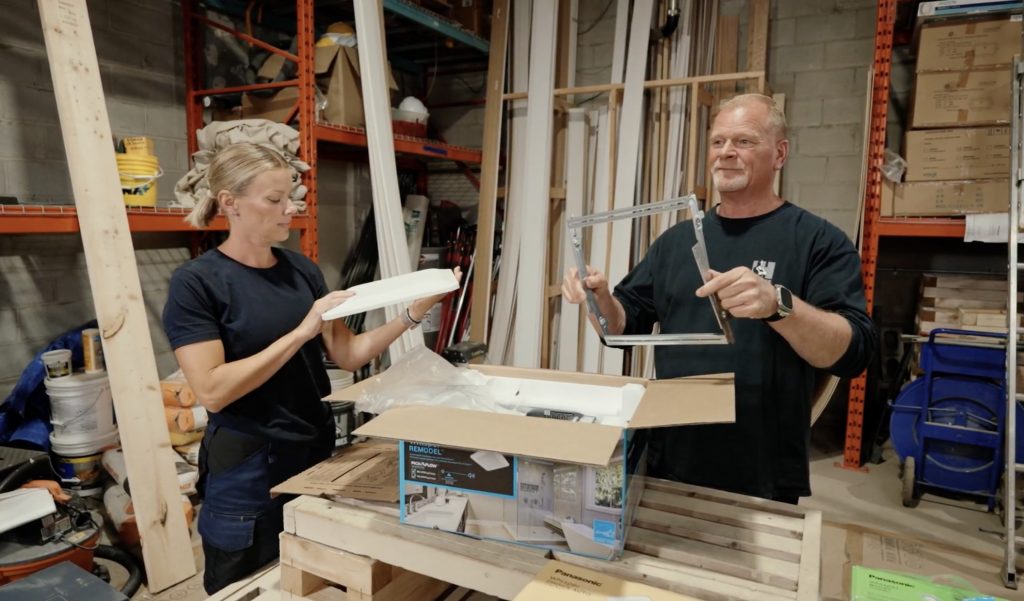
The Flex-Z Fast® bracket allows secure installation entirely from below the ceiling without needing access to the attic.
What it’s best for:
- Medium to large sized rooms
- Finished ceilings where you don’t have attic access
- Standard bathrooms or laundry rooms needing reliable, quiet ventilation
This is your go-to retrofit fan. It is easy to install, dependable, and quiet. Plus, it is built to last longer than standard builder-grade fans.
WhisperChoice Auto™— Customizable Ventilation with Pick-A-Flow®
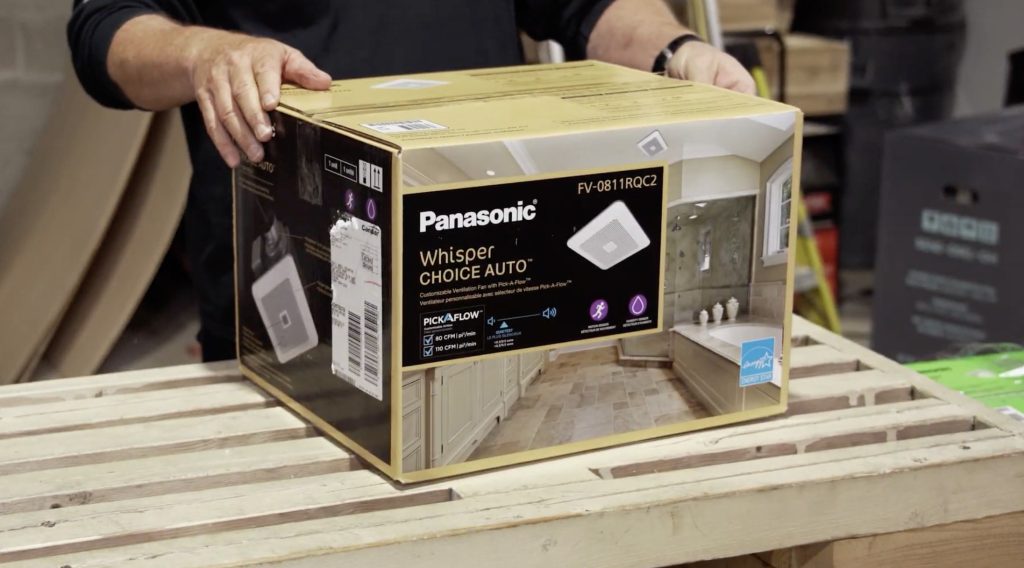
Excellent for new construction and retrofitting homes where occupants forget to turn fans on.
The WhisperChoiceAuto™ offers premium features with motion and condensation detection sensors. Designed for both new construction and renovations, this model offers flexibility, strong performance and one of the quietest fans on the market.
Key features:
- Features humidity and motion sensors
- Pick-A-Flow® airflow options (80/110 CFM)
- Ultra quiet 0.3 zones, and energy-efficient operation
- Easy with the Flex-Z Fast® Installation Bracket to help you position the fan where you want it, providing flexible, fast, and simplifying your installation
- Flexible duct options (4″ or 6″) for easier layout design
- Fits joists 2 x 8” or larger
- Built-in damper reduces backdrafting
- UL listed for a tub/shower enclosure when GFCI protected
- Energy Star Certified
What it’s best for:
- Multi-room versatility
- Excellent for new construction and retrofitting homes where occupants forget to turn fans on
- High-moisture environments (bathrooms, basements)
- Energy-efficient, code-compliant ventilation strategies
- Medium to larger rooms
- Projects where ducting flexibility matters
Where Should You Install a Ventilation Fan?
You’d be surprised how much moisture is created in the average home – not to mention the moisture we humans create. Did you know that the biggest source of moisture in your home is breathing?
Every home needs ventilation, especially in these rooms:
- Bathrooms (most important)
- Kitchens
- Laundry rooms
- Basements
These are the problem areas—ignore them, and problems build up fast.
Common Mistakes to Avoid When Installing A Fan
Trust me I’ve seen it all —and these all lead to trouble:
- Not installing a fan where it’s needed
- Choosing the wrong size (CFM mismatch)
- Poor ducting or not venting outside
- Ignoring noise levels (so the fan never gets used)
Cut corners here, and you’ll pay for it later.
Ventilation Fan Installation and Maintenance Tips
You can install some fans yourself, but if ducting or electrical work is involved, bring in a pro. Done wrong, it won’t perform—and it could cause bigger issues.
Once it’s in:
- Clean the fan regularly
- Check ducts for blockages
- Make sure it’s venting properly outside
And if your fan is old, loud, or not doing the job anymore—replace it. Upgrading to a high-quality unit is one of the easiest ways to improve your home’s air quality.
Ventilation isn’t a luxury—it’s a must. Do it right the first time, using quality products, like Panasonic ventilation fans and you’ll protect your home and your family’s health for years to come.
FAQs About Ventilation Fans
-
Do all bathrooms need a ventilation fan?
Yes—every bathroom should have proper ventilation, full stop.
If there’s no window that actually provides effective natural ventilation, then a fan isn’t optional—it’s required. Even if you do have a window, I still recommend a fan because humidity doesn’t care what season it is. Showers produce a lot of moisture, and if that moisture has nowhere to go, it ends up in your drywall, framing, insulation, and eventually turns into mold.
I’ve seen too many bathrooms where people thought “we’ll just open a window.” That’s not enough in Canadian homes most of the year.
-
How long should you run a ventilation fan?
Longer than most people do it—that’s the honest answer.
Run the fan:
- During your shower
- And for at least 20–30 minutes after
That post-shower run is the part people skip, and that’s where damage starts. You’re trying to clear the humidity from the air and from surfaces. If you shut it off too early, you’re just leaving moisture behind to soak in.
Some newer fans with humidity sensors make this easier because they run automatically until the moisture level drops. That’s the kind of system that actually protects your home and a feature I like.
-
What size ventilation fan do I need?
This is where people get it wrong all the time.
Fan size is measured in CFM (cubic feet per minute), and it needs to match the room size.
A simple rule of thumb:
- Small bathroom: 50 CFM
- Medium bathroom: 80–100 CFM
- Large bathroom or ensuite: 100+ CFM
I don’t just go by square footage. If you’ve got a big shower, a jetted tub, or high ceilings, you need more capacity. Undersizing a fan is one of the most common mistakes I see, and it guarantees moisture problems down the road.
-
Are quiet ventilation fans worth it?
Yes—they absolutely are, and here’s why.
A noisy fan doesn’t get used properly. If it sounds like a jet engine, people shut it off early or don’t run it at all. That defeats the purpose.
Quiet fans—especially high-quality ones—are:
- More likely to be used correctly
- Better built overall
- Often more energy efficient
I always say this: the best ventilation fan is the one people actually leave on long enough to do its job. No one wants to hear a noisy fan.
Disclaimer: I only recommend products I would use myself and all opinions expressed here are our own. This post may contain affiliate links.
READ NEXT:
Related Articles

10 Heat Pump Questions Homeowners...
Heat Pump FAQ Heat pumps have been around for awhile now but recently they've been...

How To Improve Ventilation In...
How Does Home Ventilation System Work Builders today construct new homes much more "air-tight" than...

Cost of Neglecting Home Maintenance
The Importance of Home Maintenance Too many homeowners wait until something in their house breaks...