



When it comes to your home, siding isn’t just about looks—it’s your first line of defense. It protects your house from the elements, helps control energy efficiency, and plays a...
Buyers Guide For Exterior Siding Materials – Mike Holmes’ Expert Tips
By Mike Holmes
Mike’s Advice / Home Safety & Maintenance
Tuesday, April 21st, 2026 @ 9:27pm
Complete Buyers’ Guide For Exterior Siding – Types & Benefits
Buying exterior siding isn’t just a cosmetic decision, it’s one of the most important choices you’ll make for your home’s long-term protection.
In this complete buyer’s guide, we’ll break down the main types of exterior siding, what makes each one different, and the benefits and drawbacks you need to know before making your decision. Because at the end of the day, it’s not just about curb appeal, it’s about protecting your investment, and making sure you don’t end up paying for the same job twice.
What Is Exterior Siding & Why It Matters?
Your siding is your home’s shield. It’s what stands between your structure and rain, snow, wind, heat, and everything else nature throws at it. But here’s the problem: not all siding is created equal, and what looks good on day one doesn’t always perform well over time.
Traditional siding is often installed directly onto the wall. It does the job, but it’s a more basic approach.
Siding systems go a step further. Installed over a subframe, they create a ventilated air space (rainscreen) behind the material. That gap is critical which allows moisture to drain and dry, helping prevent rot, mold, and long-term structural damage.
Both systems protect your home, but a properly designed cladding system gives you better durability and peace of mind.
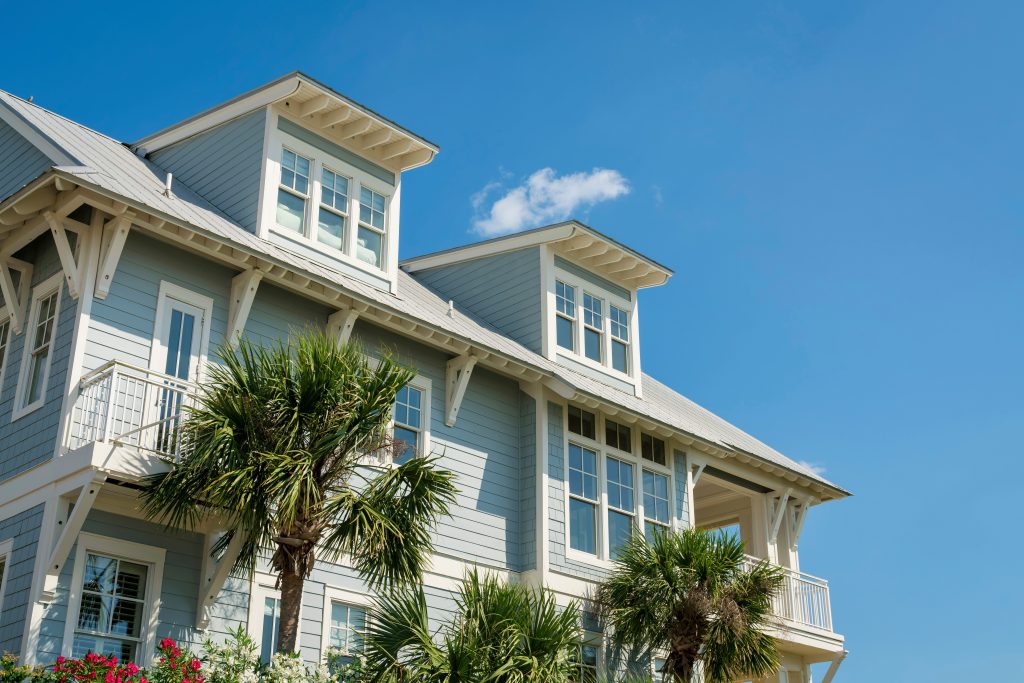
Your siding is your home’s shield. It’s what stands between your structure and rain, snow, wind, heat, and everything else nature throws at it.
How to Choose Your Exterior Siding Materials
When choosing siding, you need to think about:
- Long-term performance
- Maintenance requirements
- Weather resistance
- Real value over time
It’s not just what looks good on a brochure. A house that isn’t protected is a house that will rot, mold, and cost you big time down the road.
Here’s how I look at the major siding materials on the market and why one particular material, Premium Cellular PVC Siding by Elite Cladding®, is my preferred choice.
It’s a product I’d actually put on my own home.
Common Exterior Siding Materials
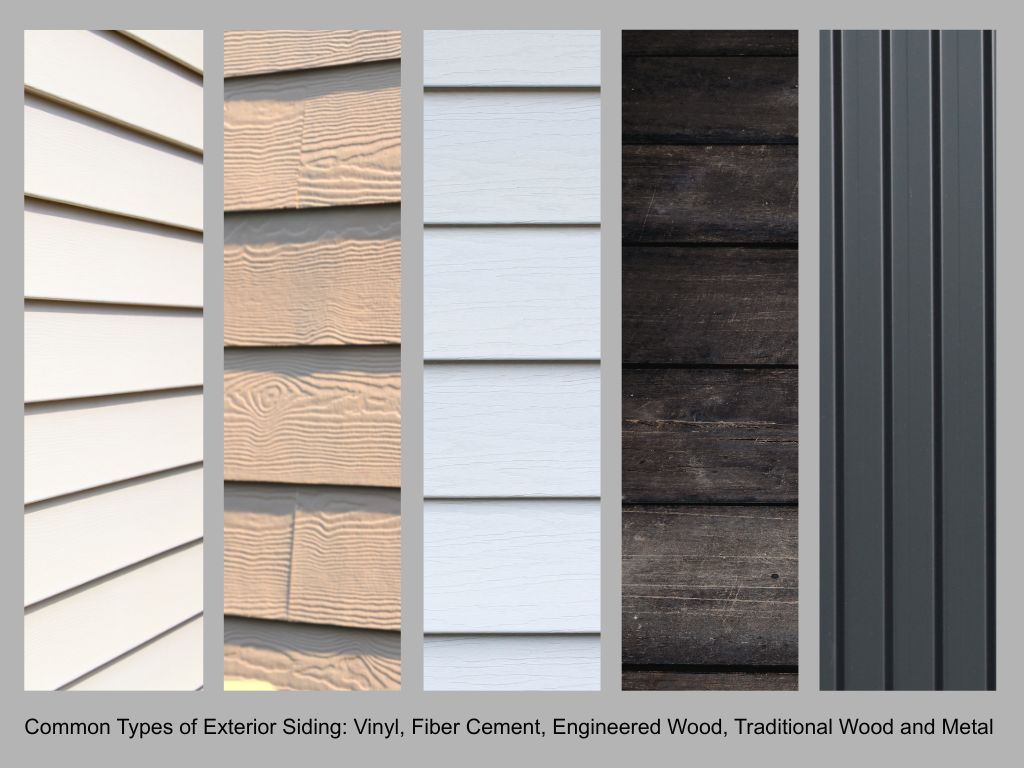
Vinyl Exterior Siding
Vinyl siding is a rigid plastic exterior siding. This is one of the most common and economical options.
Pros:
- Affordable
- Easy to install
- Wide range of colors and styles
- Lower maintenance than painted wood
Cons:
- Warp, sag, crack, and fade
- Lower durability in extreme weather
- Cheaper products can look hollow or “plastic”
- Limited lifespan compared to premium materials
Mike’s Tip: Traditional vinyl siding has its place, especially if the budget is tight or for rental/secondary structures, but for my own home I don’t want siding that I know will fade or degrade over the years.
Fibre Cement Exterior Siding
Fibre cement siding is a composite of cement, sand, and cellulose fibers and is designed to mimic wood.
Pros:
- Fire-resistant
- Durable
- Resistant to rot and insects
- Strong visual appeal
I’ve used fibre cement board on past projects, however my biggest complaint was the weight and the challenging installation.
Cons:
- Heavy and labour-intensive to install
- Requires painting or sealing
- Can absorb moisture if not installed properly
- Susceptible to cracking in freeze-thaw climates
Mike’s Tip: Fiber cement can be a solid choice — but only if installed perfectly. If there’s a gap in flashing or caulking, it will lead to moisture problems, and repainting adds ongoing costs.
RELATED:
Engineered Wood Exterior Siding
Engineered wood siding is a durable, cost-effective exterior cladding made with a process of combining wood fibres or strands with resins and waxes under very high heat and pressure.
Pros:
- Mimics real wood
- More durable than natural wood
- Lighter than fibre cement
Cons:
- Vulnerable to moisture if improperly installed
- Requires ongoing maintenance
- Can swell or deteriorate over time
Mike’s Tip: Engineered wood siding can look great, but it’s still wood. If moisture gets in, you’ll have problems. Proper installation and a rainscreen system are critical.
RELATED:
Traditional Wood Exterior Siding
Traditional wood siding is typically wood planks milled from cedar, pine, or redwood.
Pros:
- Beautiful, classic appearance
- Natural insulation properties
- Easily repairable
Cons:
- High maintenance (painting/staining)
- Susceptible to rot and insects
- Performance depends heavily on upkeep
Mike’s Tip: If you love wood and are prepared to maintain it forever, it can be stunning. But for most homeowners it’s a maintenance trap.
RELATED:
Why You Should Install Gutter Guards
Premium cellular PVC products generally have better insulating properties and more resilience in freeze-thaw climates than low-end vinyl. The capstock and material formulation help with fading, temperature swings and impact resistance.
Metal Exterior Siding (Aluminium or Steel)
Metal siding is commonly used in modern or industrial designs.
Pros:
- Extremely durable
- Fire-resistant
- Low maintenance
Cons:
- Can dent and scratch
- Noisy during rain or hail
- Expands and contracts with temperatures
Mike’s Tip: Metal has its niche, great on modern homes or outbuildings. But wouldn’t be my first choice, and thermal movement and dents bother me for residential designs.
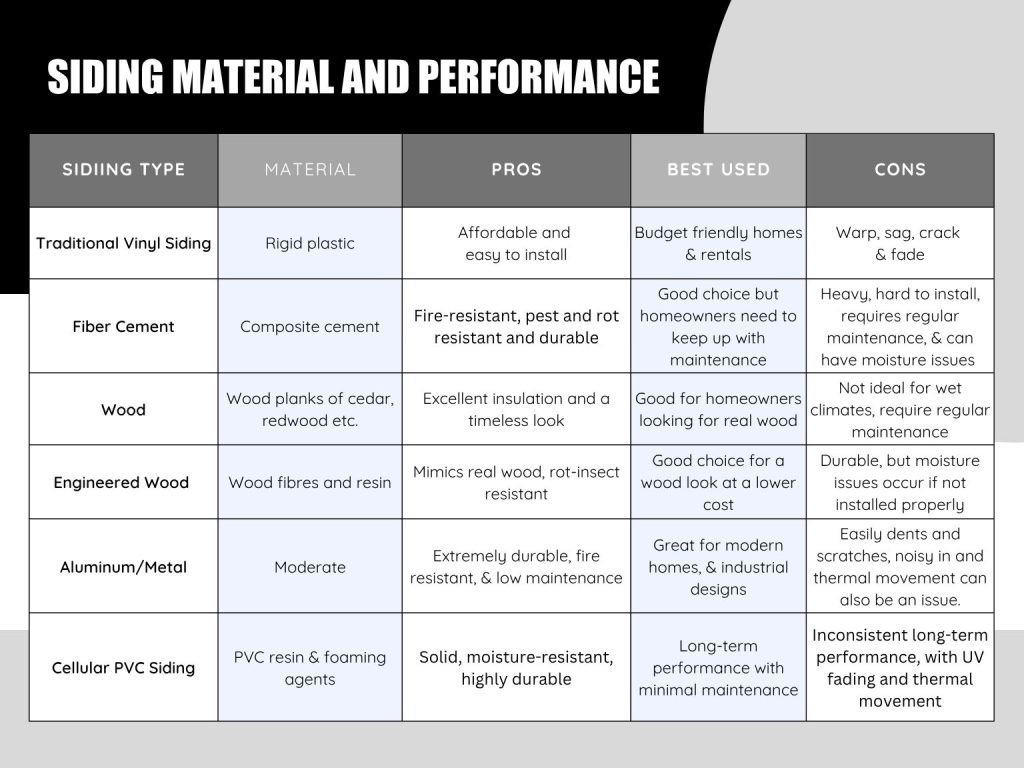
Common Mistakes Homeowners Make When Choosing Siding
Choosing siding can be overwhelming — here are the biggest mistakes I see:
- Choosing based on price alone
- Ignoring your local climate
- Poor installation practices
- Underestimating long-term maintenance
If you cut corners now, you’ll pay later with extra costs and maintenance.
RELATED:
What I Would Personally Install for Exterior Siding
Why Choosing the Right Exterior Siding Materials Matters
After inspecting thousands of homes and fixing siding jobs gone wrong, I want a siding that:
- Never rots
- Doesn’t need painting
- Can handle weather extremes
- Looks great upfront and continues for years
- Isn’t a maintenance nightmare
For me, that means going with a high-performance premium cellular PVC siding.
Why Premium Cellular PVC Siding Stands Out
Premium cellular PVC siding is engineered to outperform traditional materials.
- 100% moisture resistant (won’t rot)
- Insect resistant
- No painting needed, and premium brands like Elite Cladding® will have color throughout the material
- Mimics traditional wood profiles beautifully
- Very low maintenance
- Outstanding long-term performance
There’s a big step up between typical PVC and premium cellular PVC products. Higher-end systems are engineered for better color retention, heat resistance, and have structural stability.
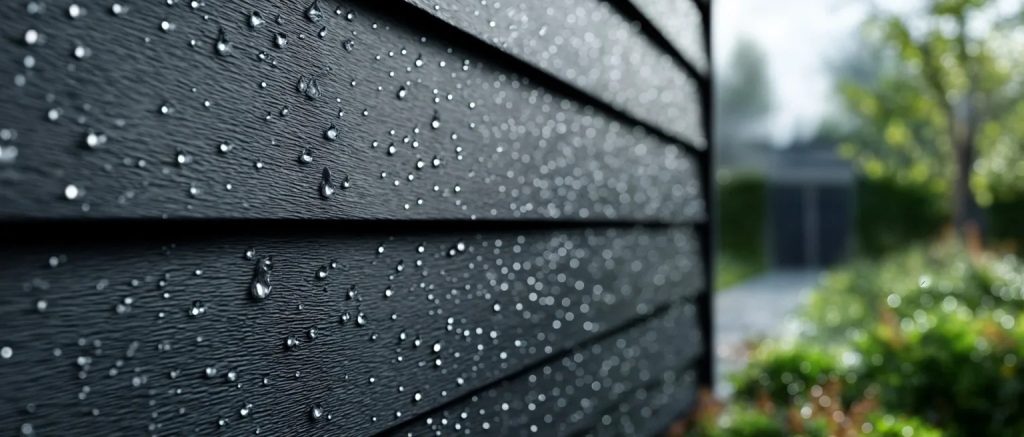
Premium cellular PVC siding is engineered to outperform traditional materials
My Choice? Elite Cladding® – High Performance Cellular PVC Siding
If I were installing siding on my own home, I’d choose Elite Cladding®.
It combines the look of wood with the durability of advanced materials, without the constant maintenance.
- No sanding or repainting
- Strong performance in harsh North American climates
- Clean, consistent finish over time
I have compared it to other siding materials on the market, and it is a step above anything else I have seen.
RELATED:
Cellular PVC Siding | 11 Benefits of Elite Cladding® for North American Homes
What Exactly Is Premium Cellular PVC Exterior Siding?
Premium cellular PVC siding is an exterior siding made from cellular polyvinyl chloride (PVC) that is engineered to look like real wood but perform better in harsh weather.
It’s:
- Solid and durable
- Resistant to moisture, rot, and insects
- Stable through temperature changes
- Low maintenance
It provides a long-lasting protection and a clean, consistent exterior finish for your home.
RELATED:
Pro Insight: Why AuraLok™ Panel Connector Matters?
AuraLok™ Panel Connector by Elite Cladding® is a precision locking system for siding panels and a major performance advantage as it helps installers:
- Creates a tighter, more secure fit
- Reduces gaps and water intrusion risk
- Improves alignment and finish
Think of it like this, if your siding doesn’t lock together properly, you end up with gaps, uneven lines, and potential water problems. AuraLok™ Panel Connector solves that by making the panels lock together as a system, not just sit beside each other.
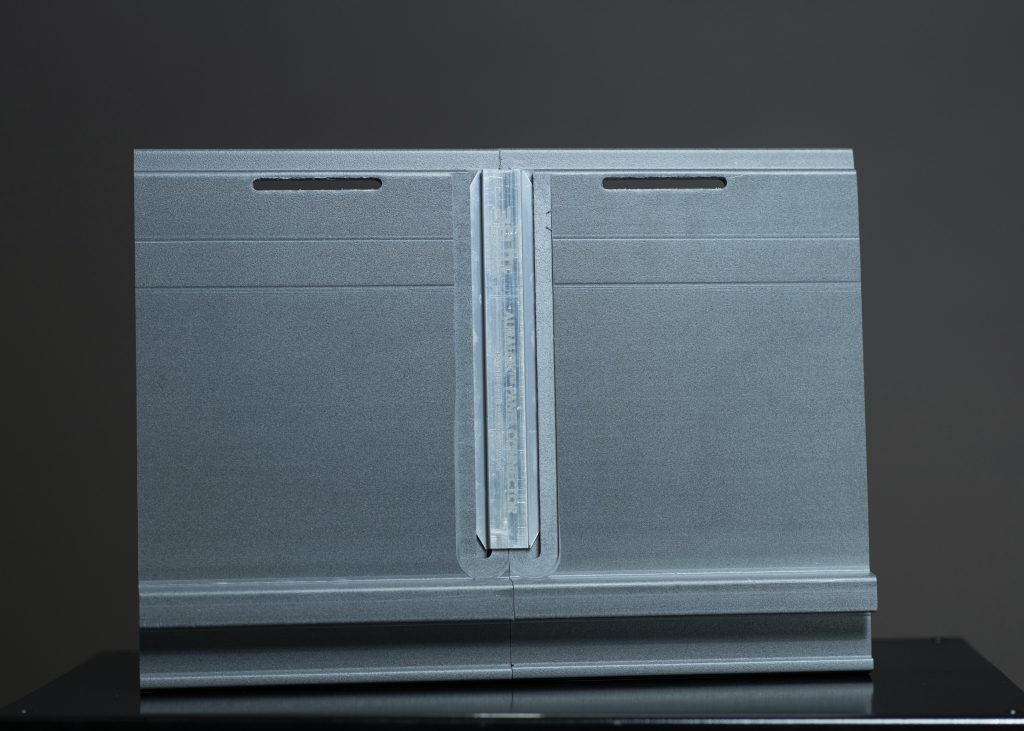
AuraLok™ Panel Connector by Elite Cladding® makes the panels lock together as a system, not just sit beside each other.
When comparing exterior siding options, it’s important to look beyond upfront cost. Materials like cellular PVC may have a higher initial price, but their durability and minimal maintenance can make them the most cost-effective choice over time, especially with premium systems like Elite Cladding®. This will ensure your home is looking great for the next 20, 30 even 40 years.
I’ve seen too many homeowners make decisions based on price or appearance alone, only to end up dealing with moisture damage, warping, rot, or constant maintenance that never seems to end. That’s not building it right.
Every material has its place: traditional vinyl, fibre cement, engineered wood, traditional wood, and metal all come with their own strengths and limitations. But what really matters is how the system performs as a whole, especially when it’s exposed to real weather conditions year after year.
If you’re looking for long-term value, low maintenance, and real durability, high-performance cellular PVC siding stands out. It gives you the look of traditional wood without the ongoing headaches that usually come with it. That’s why systems like Elite Cladding® are becoming a smart choice for homeowners who want to do it once and do it right.
Frequently Answered Questions:
Can exterior siding increase home value?
Yes. New siding can significantly improve curb appeal and resale value. Buyers are especially attracted to low-maintenance, high-performance materials. Choosing a premium option like Elite Cladding® can make your home more appealing while reducing future maintenance concerns.
What siding performs best in Canadian weather?
In climates with freeze-thaw cycles, heavy moisture, and temperature swings, siding must be highly resistant to expansion, contraction, and water infiltration. Cellular PVC siding performs exceptionally well in these conditions. Systems like Elite Cladding® are specifically designed to handle harsh North American weather.
What is the most low-maintenance siding option?
Cellular PVC siding is one of the lowest-maintenance siding materials on the market. It doesn’t require painting, resists moisture, and won’t rot or attract insects. Unlike wood or fibre cement, premium options like Elite Cladding® maintain their appearance without ongoing upkeep.
Is cellular PVC siding better than vinyl siding?
Yes, cellular PVC siding is a significant upgrade over traditional vinyl. While traditional vinyl is more affordable upfront, it can warp, fade, and crack over time. Cellular PVC is thicker, more durable, and resistant to moisture and temperature changes. Products like Elite Cladding® are engineered for stability and long-term performance, making them a better choice for homeowners planning to stay in their home.
READ NEXT:
Why Residential Construction Is Struggling to Attract the Next Generation
Related Articles
What is The Best Exterior...
When it comes to your home, siding isn’t just about looks—it’s your first line of...
Trick Or Threat – How...
Halloween Home Safety Tips: How to Prepare Your Home for Trick-or-Treaters Halloween is one of...
Indoor Fall Home Maintenance Checklist
Fall Home Maintenance Checklist: Get the Inside of Your Home Ready for Winter Small home...